
MEMORY? MEET
Mnemonics
Your brain memorizes faces, songs, and embarrassments without trying. Chinese only feels impossible because the tools you’ve used fight the way memory already works.
Scene
6seconds
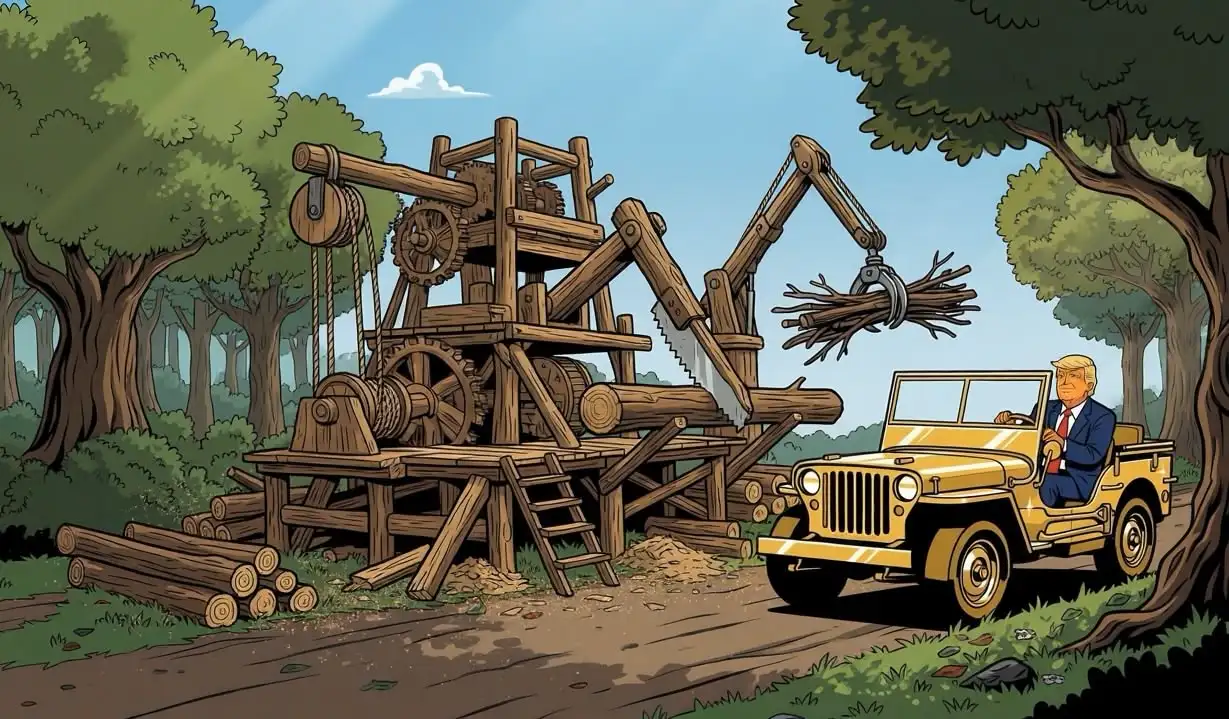
Your brain keeps the whole scene after one look.
1
木 — Tree. First component. A tree by itself — and a building block inside hundreds of other characters.
2
几 — Several. Second component. We read it as several — a handful of pieces, ready to assemble.
3
机 — Machine. The target character. The wooden contraption being built right here in front of you. Made from the two simpler parts hidden in the scene.
4
Jeep — The sound. An English word that sounds like jī. Your mouth already knows how to say it.
5
Don — The 1st tone. Wherever Don appears, the syllable is held high and flat. Tone 1, every time.
Composition
2sides
Every scene splits the same way.
🤵🏻♂️
Hans · Meaning
机 = 木 + 几
Every character breaks into pieces, each with a meaning of its own. Hans shows which fit together, and why. The smallest pieces are anchors ⚓ — everything else builds on them.
Left
机
Machine
=
木
Tree
+
几
Several
👩🏼🎨
Torie · Sound
Jee(p) + 1st Tone = jī
Every sound hides inside an English word you already say. Torie anchors it there 🔊, then wraps it in a story bold enough to burn in. The colored character carries the tone.
Right
Jeep
+
Don
=
Science
15layers
A century of memory enhancement science.
keyword method
Memory That Hooks
Keyword Method
Memory That Hooks
What it is
A phonetic bridge — an English word that sounds like the Mandarin one, attached to a vivid image.
Where we use it
Every Mandarin syllable gets a Soundword. jī lives inside a yellow Jeep. Said once, heard forever.
Why it sticks
Atkinson (1975): foreign vocabulary learned through keywords beat rote memorization roughly two-to-one on long-term recall.
pegword system
Memory That Names
Pegword System
Memory That Names
What it is
Fixed mental pegs you hang new information on. Each peg has a personality.
Where we use it
The five tones become five Tonëgos. Hear rising — see Master. Hear crashing — see Bird.
Why it sticks
Pegword systems date to Greek orators. Bugelski (1968) confirmed ordered information sticks twice as well when each item has a named peg.
story method
Memory That Plays
Story Method
Memory That Plays
What it is
Wrapping disconnected facts in a single scene that links them into one memory.
Where we use it
Every character lives in a six-second scene. Don drives a Jeep. Trees become a machine. The hanzi is the picture.
Why it sticks
Bower & Clark (1969): students using narrative recalled six times more material than students using lists.
dual coding
Memory That Doubles
Dual Coding
Memory That Doubles
What it is
Encoding the same information in two channels at once — words and pictures, in parallel.
Where we use it
Hans gives you the words. Torie gives you the picture. The card stores both. Either one retrieves the whole.
Why it sticks
Paivio (1971): information encoded verbally and visually is recalled at roughly double the rate of either alone. This is why HanziStories has two guides.
color coding
Memory That Codes
Color Coding
Memory That Codes
What it is
A second encoding channel — pure color — that retrieves information without passing through words.
Where we use it
Each tone wears a signature color. The color rides the Tonëgo, the pinyin, the hanzi itself. After enough exposures, the color alone tells you the tone.
Why it sticks
Wichmann, Sharpe & Gegenfurtner (2002): colored stimuli are recognized faster and recalled longer than the same material in greyscale.
chunking
Memory That Fits
Chunking
Memory That Fits
What it is
Breaking complex information into smaller, reusable units the mind can hold at once.
Where we use it
Every character is broken into components you've already met. Learn 200 components — read 5,000 characters.
Why it sticks
Miller (1956) — the magical number seven, plus or minus two — proved working memory holds about seven chunks at once.
linking method
Memory That Chains
Linking Method
Memory That Chains
What it is
Tying each new item to one you've already mastered, so memory grows by chains rather than islands.
Where we use it
Every character in The Chain builds from components you already know. You never start from scratch.
Why it sticks
Linked sequences exploit the brain's strongest recall pattern — cued retrieval. Each item is a key to the next.
method of loci
Memory That Places
Method of Loci
Memory That Places
What it is
Anchoring information to fixed spatial positions you walk through in your mind.
Where we use it
Every scene splits the same way. Structure sits on the left. Sound sits on the right. Your eye learns the geography before it learns the content.
Why it sticks
Yates (1966) traced this back to Greek orators walking imagined palaces. Maguire et al. (2003): spatial encoding fires the brain's strongest recall circuits.

fixed frame
Memory That Frames
Fixed Frame
Memory That Frames
What it is
A scaffold that never changes — so the variable content inside it lands harder.
Where we use it
Hans speaks the same way every time you meet a character. After a few cards, the shape of his voice disappears into the background — and what's new about this character pops into focus.
Why it sticks
Anderson (1983): a repeated identical structure automates into a retrieval cue. Your brain predicts the shape of the answer before retrieving its content — freeing working memory to encode what's unique.

elaborative
Memory That Digs
Elaborative Encoding
Memory That Digs
What it is
Memory holds deeper when new information links to why — context, meaning, judgment — not just what.
Where we use it
Hans and Torie host a free-flowing radio show on every character — etymology, culture, what the bronze-age scribes were thinking, why a radical sits where it does. Conversation, not lecture. The character stops being a shape; it becomes a story you've heard two people argue about.
Why it sticks
Craik & Lockhart (1972): material processed for meaning is recalled at substantially higher rates than material processed for surface features.
spaced repetition
Memory That Returns
Spaced Repetition
Memory That Returns
What it is
Reviewing material at expanding intervals — just before you'd forget it.
Where we use it
Hanzitelling sends stripped-down flashcards through WhatsApp at scientifically-timed intervals — just the character, just the meaning, guess the other half. You don't schedule reviews. They arrive.
Why it sticks
Ebbinghaus (1885) mapped the forgetting curve. 140 years of replication confirm it — strategic timing flattens forgetting.
retrieval practice
Memory That Pulls
Retrieval Practice
Memory That Pulls
What it is
Pulling an answer out of memory — not re-reading it — is itself the encoding event.
Where we use it
Before every reveal, there's The Void. A beat where you predict what comes next. The act of pulling makes it stick harder than any explanation could.
Why it sticks
Karpicke & Roediger (2008): students who tested themselves retained material at roughly twice the rate of students who re-read.
enactment effect
Memory That Traces
Enactment Effect
Memory That Traces
What it is
Your hand performs the character. Your body remembers what your eye alone might forget.
Where we use it
Trace any character with your finger or your cursor. The act of moving through the strokes lays down a second memory — separate from the one your eye built.
Why it sticks
Engelkamp & Krumnacker (1980): actions are recalled at substantially higher rates than verbal descriptions of those actions. Tan et al. (2005) confirmed it specifically for Chinese — handwriting practice improves character recognition independent of visual study.
distinctiveness
Memory That Burns
Distinctiveness Effect
Memory That Burns
What it is
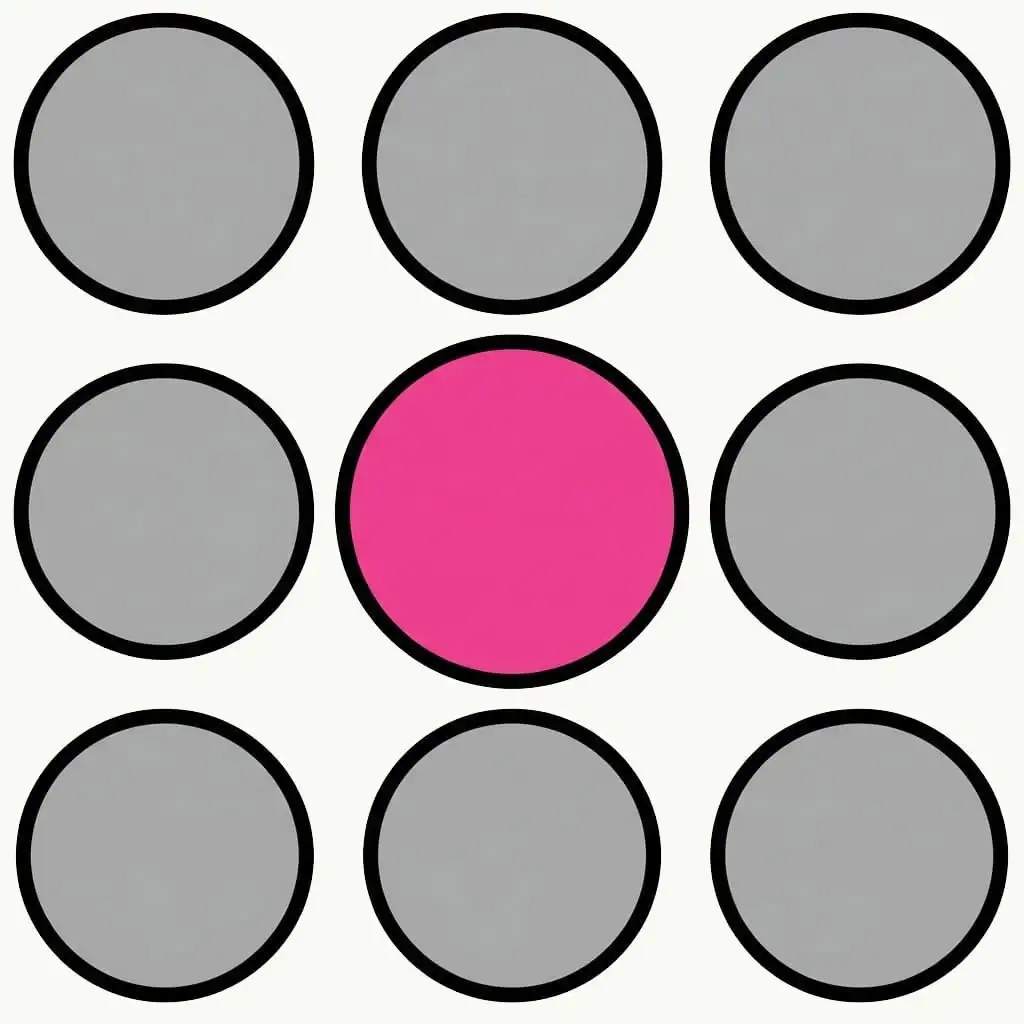
The brain logs what stands out. Identical items blur. One strange thing burns in.
Where we use it
Bold Line Editorial style. Thick black outlines. Flat color. Tonëgos doing things humans don't. Nothing about an HS scene is forgettable by accident.
Why it sticks
Von Restorff (1933): an item that breaks pattern is recalled at far higher rates than its uniform neighbors. A century later the effect still carries her name.

historical present
Memory That Happens
Historical Present
Memory That Happens
What it is
Telling a story in present tense — as if you're inside it right now, not watching it through glass.
Where we use it
Every Torie line is in present tense. Bird perches. He dives. He targets the moon. Never Bird perched. Your nervous system responds as if the scene is happening to you — and what your body feels, your memory keeps.
Why it sticks
LaBar & Cabeza (2006): emotionally aroused encoding produces more durable memory traces. Present tense collapses narrative distance to zero — the scene is a now, not a was.
HS Method
5pillars
Each pillar leans on the others.